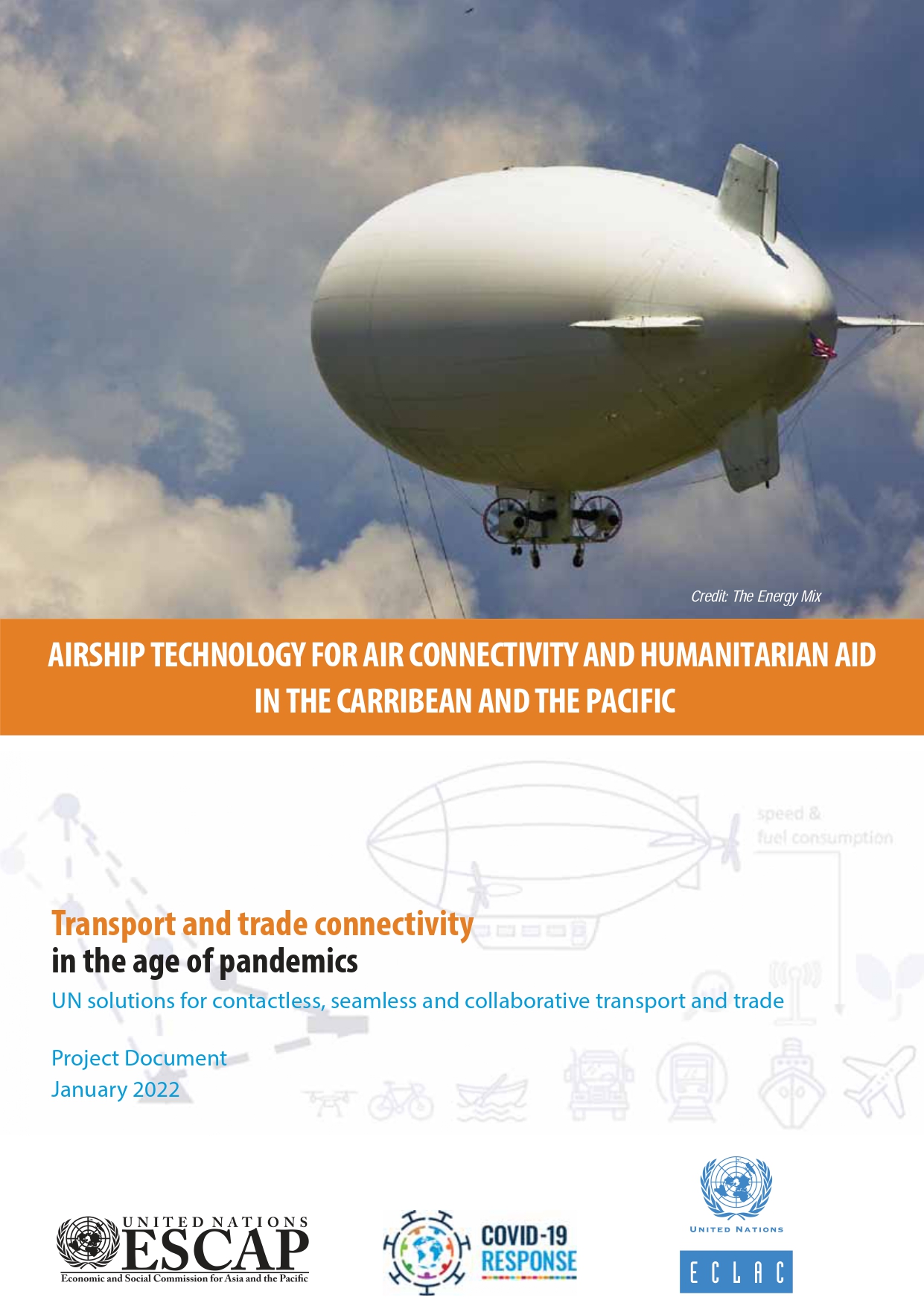
Latin America and the Caribbean

24 January 2022

The Airship transport alternative, in its diverse engineering variants, has the potential to be a game-changing technology with significant development in recent years. It offers the technical capabilities to make a broad contribution to the optimization of mobility and logistics networks in isolated communities and territories, especially but not only in Small Island Developing States (SIDS). This is particularly important in the context of the ongoing COVID-19 pandemic, as in the event of a disaster, different aid agencies are deployed with support in the distribution and logistics of perishable and essential cargo, equipment, and assistance personnel. This innovative mode should be incorporated into the transport matrix (both nationally and regionally), for the latter to move towards more efficient, sustainable, and resilient networks.

This report discusses the use of airship in the context of transport connectivity in SIDS and their vulnerability to disasters and associated challenges. The report presents the state of the airship´s technology, its flexibility, advantages, and study cases. It highlights a series of competitive advantages of airships for improving connectivity in SIDS and for addressing humanitarian, sanitary and environmental challenges across the local, regional, and global scales, as a resilient and sustainable logistics solution in synchro-modality with other modes of transport.
10 December 2020

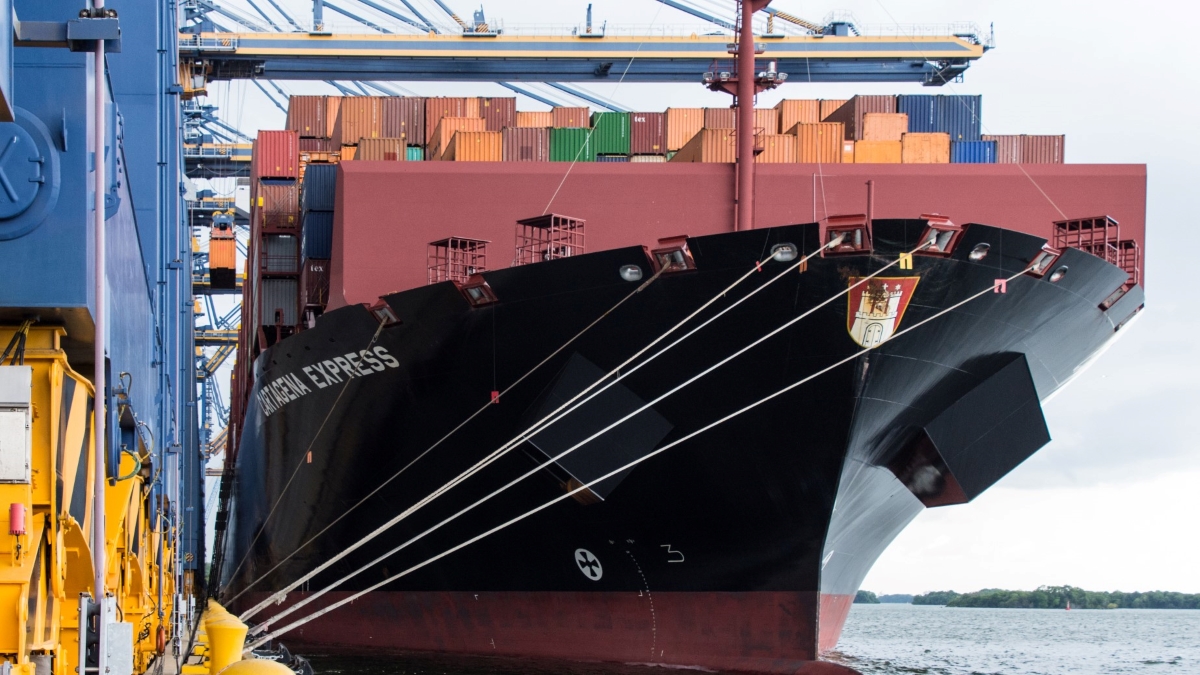
Impacts of the COVID-19 disruption on maritime trade flows, port calls, and liner shipping connectivity in Latin America and the Caribbean.

The presentation sets out the impact of the COVID-19 disruption on maritime trade flows, port calls, and liner shipping connectivity in Latin America and the Caribbean.  It also considers the response measures and coping strategies adopted in the face of th

10 December 2020
14:00 - 16:00 hrs.,  UNCTAD: UTC +1
Webinar
Geneva

Understanding the impacts of the COVID-19 disruption on maritime transport, response measures adopted and overall implications for the sector is key given the role of maritime transport as the backbone underpinning global supply chains, trade, and economic interdependency.  Any disruption to global maritime transportation networks can have far-reaching implications for a highly globalized world economy. The restrictions introduced in response to the pandemic have caused disruptions affecting ports, shipping, and supply chains.

23 December 2020

Given their geographic situation, landlocked developing countries have been hit doubly hard by the cross-border processes implemented to contain the coronavirus disease (COVID-19) pandemic.

This research provides a detailed explanation of the responses to the COVID-19 pandemic in the areas of international trade and transport adopted by the Governments of the Plurinational State of Bolivia and of Paraguay to limit the effects of the pandemic on trade operations and supply chains in their countries. It also provides a set of policy recommendations to preserve and improve trade facilitation and transport connectivity with transit countries in the framework of Vienna Programme of Action for Landlocked Developing Countries for the Decade 2014–2024.

Attachment
Document

17 December 2020

Given their small size and geographic isolation, Caribbean countries are highly reliant on trade and tourism as important sources of income and employment. Lockdowns in the wake of the COVID-19 pandemic have left islands closed, airports without flights, hotels shuttered, cruise ships docked in ports and economies in crisis.

This research provides a detailed explanation of the responses to COVID-19 in the areas of international trade and transport adopted by English-speaking countries of the Caribbean Community (CARICOM) to limit the effects of the pandemic on trade operations and supply chains in the region. It also provides a set of policy recommendations to preserve and improve trade and transport connectivity in the Caribbean basin.

Attachment
Document

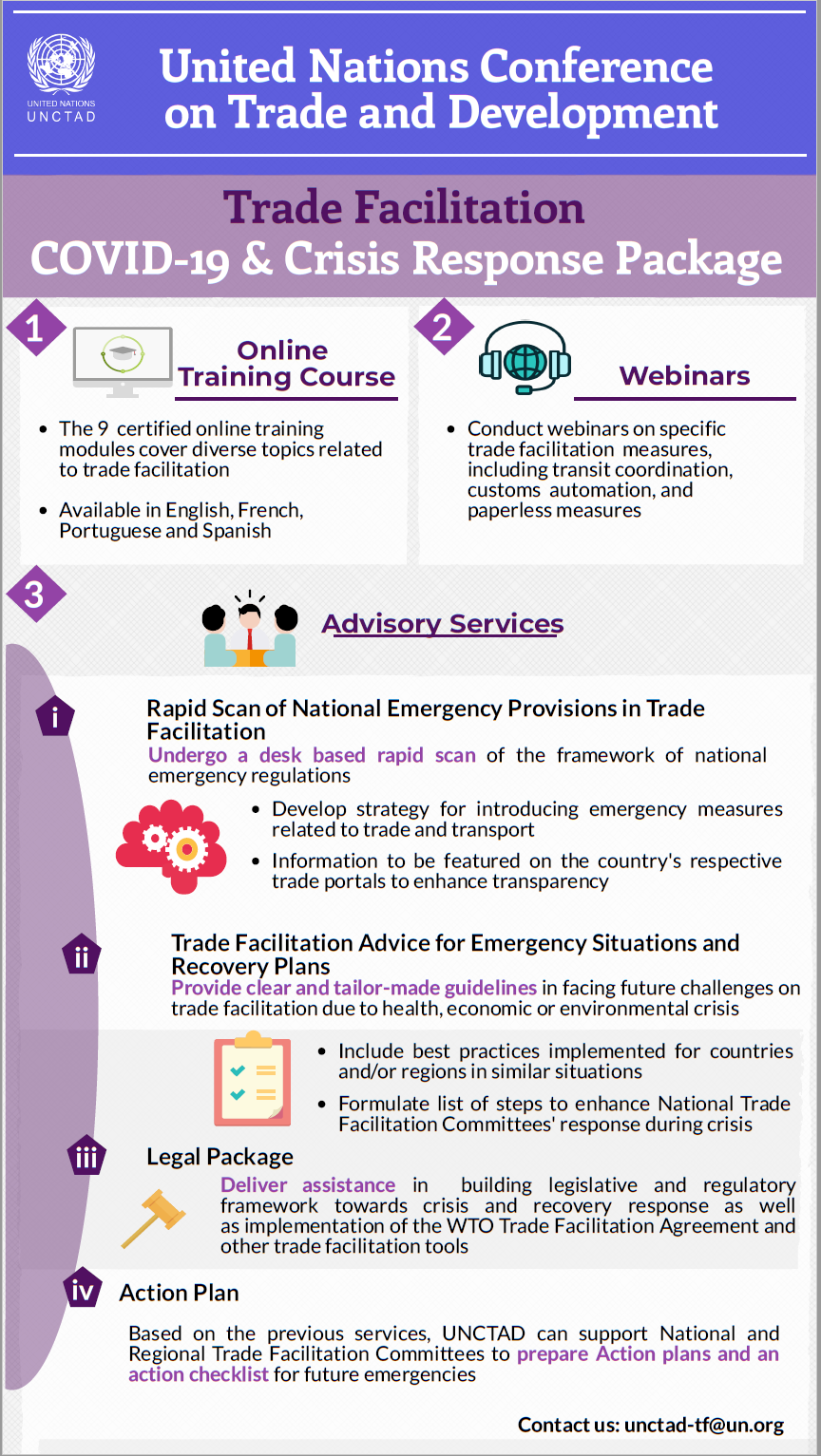
11 December 2020

UNCTAD Trade Facilitation Section has developed a Crisis Response Package which aims to assist countries to mitigate socio-economic impacts during periods of crisis. 

UNCTAD Trade Facilitation Section has developed a Crisis Response Package which aims to assist countries to mitigate socio-economic impacts during periods of crisis. The package contains:

Attachment

30 September 2020

This FAL Bulletin continues the Reflections on Disruptive Technologies in Transport that ECLAC has been publishing through this medium. The present edition analyses the importance of the digital transformation of logistics, especially in the current circumstances where the need for fluid, safe and resilient logistics calls for additional actions on traceability and process facilitation.

Attachment
Document