

Road freight in ASEAN: New COVID-19 Response and Recovery Guidelines
The Association of South-East Asian Nations (ASEAN) Member States will have new tools to help them address issues related to road freight transport caused by the COVID-19 pandemic as part of the initiatives under the ASEAN Comprehensive Recovery Framework. ASEAN has approved guidelines to support the response and recovery of road freight transport among its Member States in the context of the pandemic.
Developed with the assistance of the International Transport Forum (ITF) and the United Nations Economic and Social Commission for Asia and the Pacific (ESCAP), the COVID-19 Recovery Guidelines for Resilient and Sustainable International Road Freight Transport Connectivity in ASEAN were approved ad-referendum by the ASEAN Senior Transport Officials Meeting (STOM) on 11 January 2021.
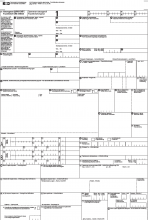
CIM/SMGS Consignment Note Standard Package
The CIM/SMGS Consignment Note Standard Package was developed as part of the United Nations response to the challenges of the COVID-19 pandemic under the United Nations multiagency project “Transport and Trade Connectivity in the Age of Pandemics: UN solutions for contactless, seamless and collaborative transport and trade”.
This electronic document equivalent Standard Package consists of the following elements:
CIM/SMGS Consignment Note URL Standard Package
The CIM/SMGS Consignment Note URL Standard Package was developed as part of the United Nations response to the challenges of the COVID-19 pandemic under the United Nations multiagency project “Transport and Trade Connectivity in the Age of Pandemics: UN solutions for contactless, seamless and collaborative transport and trade”.
This electronic document equivalent Standard Package consists of the following elements:
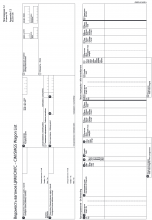
CIM/SMGS Wagon List Standard Package
The CIM/SMGS Wagon List Standard Package was developed as part of the United Nations response to the challenges of the COVID-19 pandemic under the United Nations multiagency project “Transport and Trade Connectivity in the Age of Pandemics: UN solutions for contactless, seamless and collaborative transport and trade”.
This electronic document equivalent Standard Package consists of the following elements:
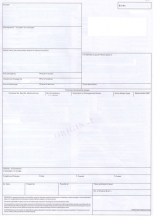
Maritime Bill of Lading Standard Package
The Maritime Bill of Lading Standard Package was developed as part of the United Nations response to the challenges of the COVID-19 pandemic under the United Nations multiagency project “Transport and Trade Connectivity in the Age of Pandemics: UN solutions for contactless, seamless and collaborative transport and trade”.
This electronic document equivalent Standard Package consists of the following elements:
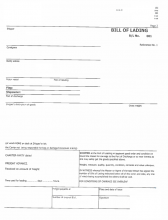
River Bill of Lading Standard Package
The River Bill of Lading Standard Package was developed as part of the United Nations response to the challenges of the COVID-19 pandemic under the United Nations multiagency project “Transport and Trade Connectivity in the Age of Pandemics: UN solutions for contactless, seamless and collaborative transport and trade”.
This electronic document equivalent Standard Package consists of the following elements:
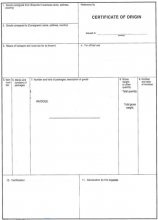
Preferential Certificate of Origin Standard Package
The Preferential Certificate of Origin Standard Package was developed as part of the United Nations response to the challenges of the COVID-19 pandemic under the United Nations multiagency project “Transport and Trade Connectivity in the Age of Pandemics: UN solutions for contactless, seamless and collaborative transport and trade”.
This electronic document equivalent Standard Package consists of the following elements:
Report on standardized digitalization in Multimodal transport UA
This report covers the results of a pilot project in the implementation of: (a) the recommendations of the 2019 and 2020 Odessa trade facilitation seminars of the United Nations Economic Commission for Europe (UNECE) to support the development of digital multimodal transport corridors to increase the harmonization and standardization of data exchange in international transport, trade and logistics to encourage electronic data exchange and thereby to reduce person-to-person contacts during the COVID-19 crisis and in the post-pandemic recovery, using relevant standards of the United Nations Centre for Trade Facilitation and Electronic Business (UN/CEFACT), a subsidiary body of the UNECE.
The aim is to foster the harmonization of electronic data sharing using global (UN/CEFACT) standards for transport, trade and logistics, and to prepare standards for e-documents based on the UN/CEFACT semantic standards and reference data models. The focus will be on the development of electronic document equivalents for the documents mentioned above, using UN/CEFACT tools in the countries developing a digital multimodal transport corridor.
Guide for National Trade Facilitation Bodies on How to Use UN/CEFACT Trade Facilitation Standards and Tools
The COVID-19 pandemic significantly disrupted supply chains and global trade flows and affected delivery of public services. As part of the emergency response, governments worldwide adopted measures to fast-track imports of essential goods and medical supplies, and to provide public services while maintaining contact restrictions and changes in staff assignments. They also adopted provisional measures to digitalize information exchange or just receive scanned or photographed copies of documents, to verify content through electronic means and to reduce the frequency of physical inspections of goods and means of transport.
Практическое руководство для Национальных органов по упрощению процедур торговли: как использовать стандарты и инструменты СЕФАКТ ООН
Пандемия коронавирусного заболевания COVID-19 существенно нарушила цепи поставок и дестабилизировала глобальные торговые потоки, а также оказала воздействие на предоставление государственных услуг. В качестве мер экстренного реагирования на чрезвычайные ситуации, правительствами стран были введены упрощенные процедуры как для импорта товаров первой необходимости и предметов медицинского назначения, так и для предоставления государственных услуг, при одновременном сохранении ограничений на контакты между людьми и принятии изменений в процедурах назначения сотрудников. Административные органы по всему миру также ввели временные меры по цифровизации информационного обмена, либо же в целях обеспечения возможности принятия отсканированных или сфотографированных копий документов, проведения проверок соответствия информации электронным образом, а также для снижения частоты проведения физических инспекций грузов и транспортных средств.