Electronic trade and transport documents and data

17 January 2022

The Air Dangerous Goods Declaration Standard Package was developed as part of the United Nations response to the challenges of the COVID-19 pandemic under the United Nations multiagency project “Transport and Trade Connectivity in the Age of Pandemics: UN solutions for contactless, seamless and collaborative transport and trade” in cooperation with ICAO.

This electronic document equivalent Standard Package consists of the following elements:


17 January 2022

The Air Way Bill Standard Package was developed as part of the United Nations response to the challenges of the COVID-19 pandemic under the United Nations multiagency project “Transport and Trade Connectivity in the Age of Pandemics: UN solutions for contactless, seamless and collaborative transport and trade” in cooperation with ICAO.

This electronic document equivalent Standard Package consists of the following elements:
 

23 December 2021

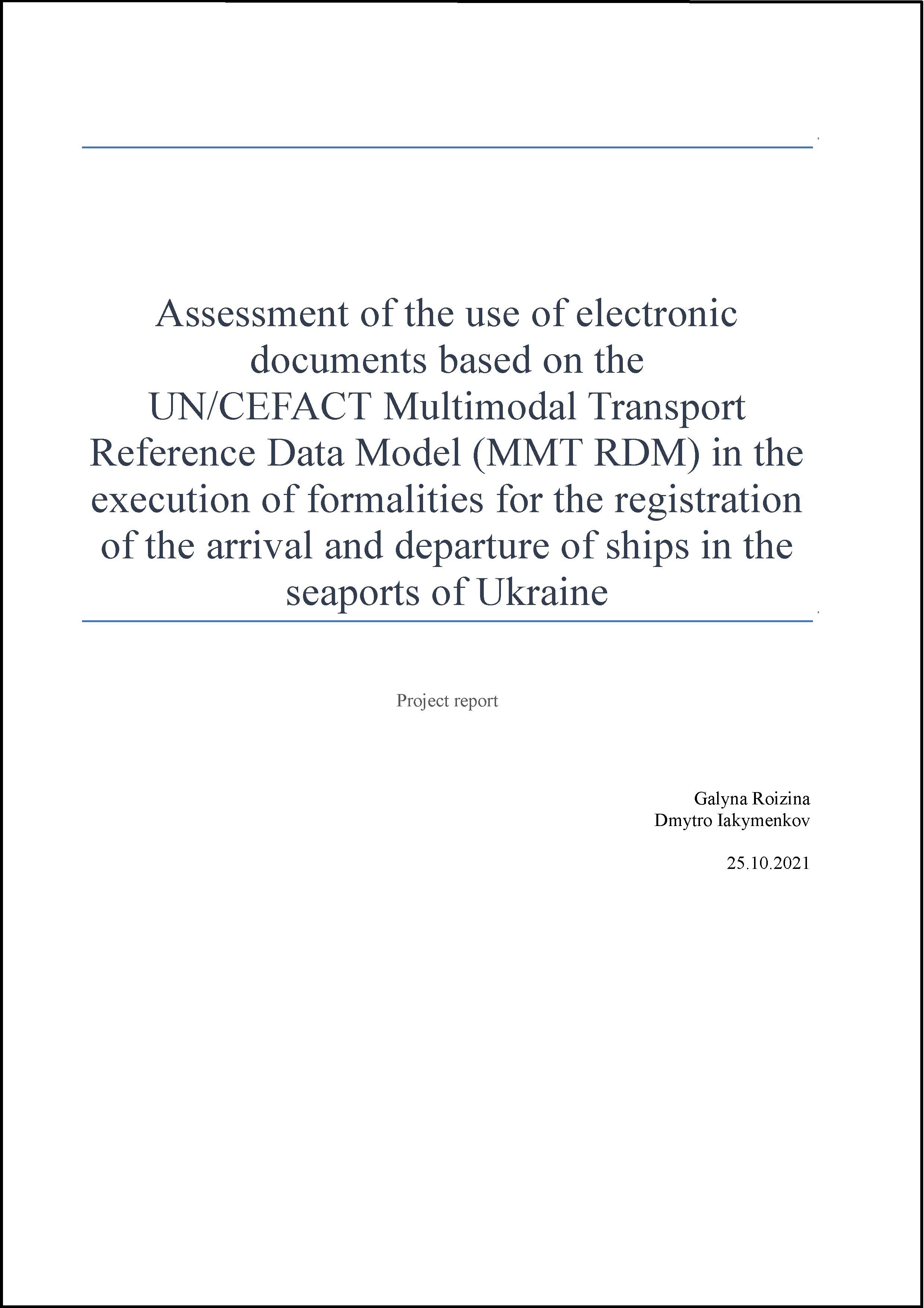
The current project focuses on reporting formalities in the seaports of Ukraine as a part of global supply chains. The crossing of multimodal transport corridors at seaports leads to the need to use the UN/CEFACT multimodal transport reference data model (MMT RDM) as a core tool for data harmonization and seamless sharing. There is also a need to link this tool with the requirements of the International Maritime Organization (IMO), national and regional regulations. The project will result in practical recommendations for the further development of digitalization of documentary procedures in Ukrainian seaports.

The objective of the project is to assess the present state of the ship-shore interaction, identify customary practices, formulate the concept of positioning of a national maritime Single Window (MSW) in regional and global multimodal transport corridors and supply chains, and then perform practical tests to prove the concept.

List of Annexes

Annex II.

Attachment

16 December 2021

The objective of this project is further development of the digital transport documents that could provide seamless information flows accompanying cargo flows between countries along the GUAM transport corridor. Due to its position in the middle of the cargo transport routes between Europe and Asia, the use of UN/CEFACT standards and recommendations for cargo information sharing along this route makes much sense.


The focus of the project is on the practical application of the data models and standards to facilitate real-world transport operations that take place along this transport route. This is achieved by creating digital twins of real business documents that are mapped to the UN/CEFACT multimodal transport reference data model (MMT RDM) to ensure interoperability both in terms of changing jurisdictions and modes of transport along the route.


List of Annexes

Annex I. Overall statistics on cargo turnover in the countries along the GUAM transport corridor

25 May 2021

The SMGS Consignment Note Standard Package was developed as part of the United Nations response to the challenges of the COVID-19 pandemic under the United Nations multiagency project “Transport and Trade Connectivity in the Age of Pandemics: UN solutions for contactless, seamless and collaborative transport and trade”.

This electronic document equivalent Standard Package consists of the following elements:

01 December 2021

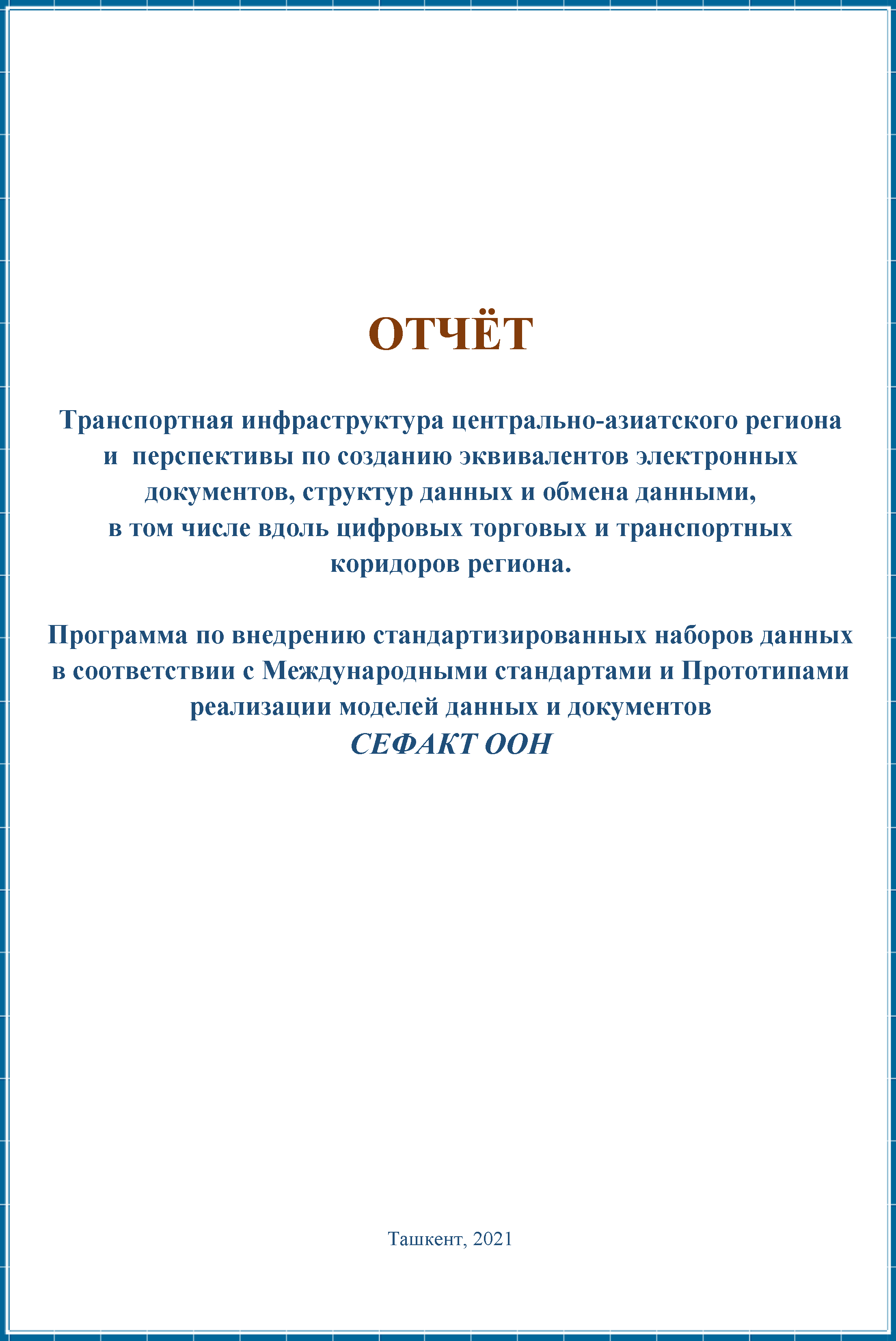
This Report serves as a preparation to the research of trade and transport corridors going though the Central Asia and establishes the necessity of digitalization of multimodal transport data as well as exchange of documents along those corridors through the use of UN & UN/CEFACT standards.

This Project is the joint initiative of the UNECE and the Ministry of Transport of the Republic of Uzbekistan.

The relevance of this project is the current common interest of all the countries in the region to jointly develop the transport links.

The objective of this project is the development of electronic document equivalents for several key documents accompanying goods that are being transported by rail, e.g. SMGS rail consignment note and/or CIM/SMGS consignment note; road consignment note, river waybill, air waybill as well as preparing the basis of the further active involvement of the Central Asian countries in this process.

24 September 2021

The FIATA eFBL Standard Package was developed as part of the United Nations response to the challenges of the COVID-19 pandemic under the United Nations multiagency project “Transport and Trade Connectivity in the Age of Pandemics: UN solutions for contactless, seamless and collaborative transport and trade”.

Available via FIATA’s GitHub repository, the data standard is offered as open source for all software providers and industry stakeholders to implement. FIATA expects its standard to become the main global standard for all House Bill of Ladings, noting the compatibility with other BLs.

The Negotiable FIATA Multimodal Transport Bill of Lading was established more than 30 years ago as a paper standard trade document. It is the only truly multimodal negotiable transport document, bearing the ICC logo, which demonstrates its conformity with the UNCTAD/ICC Rules.

FIATA decided to base its eFBL data model with the UN/CEFACT MMT Reference data model in order to ensure its interoperability with all modes of transport and actors of the supply chain.

New generation digital UN/CEFACT standards for multimodal transport will facilitate safe, secure and efficient international trade

Experts of the United Nations Centre for Trade Facilitation and Electronic Business (UN/CEFACT) finalized work on three air cargo documents: Air Waybill (AWB), Dangerous Goods Declaration (DGD), and Consignment Security Declaration (CSD). This development marks the completion of a package of standards and artefacts for the digitalization of multimodal transport data sharing for the key documents accompanying goods transported by all transport modes: road, rail, maritime, air and inland water.

12 July 2021

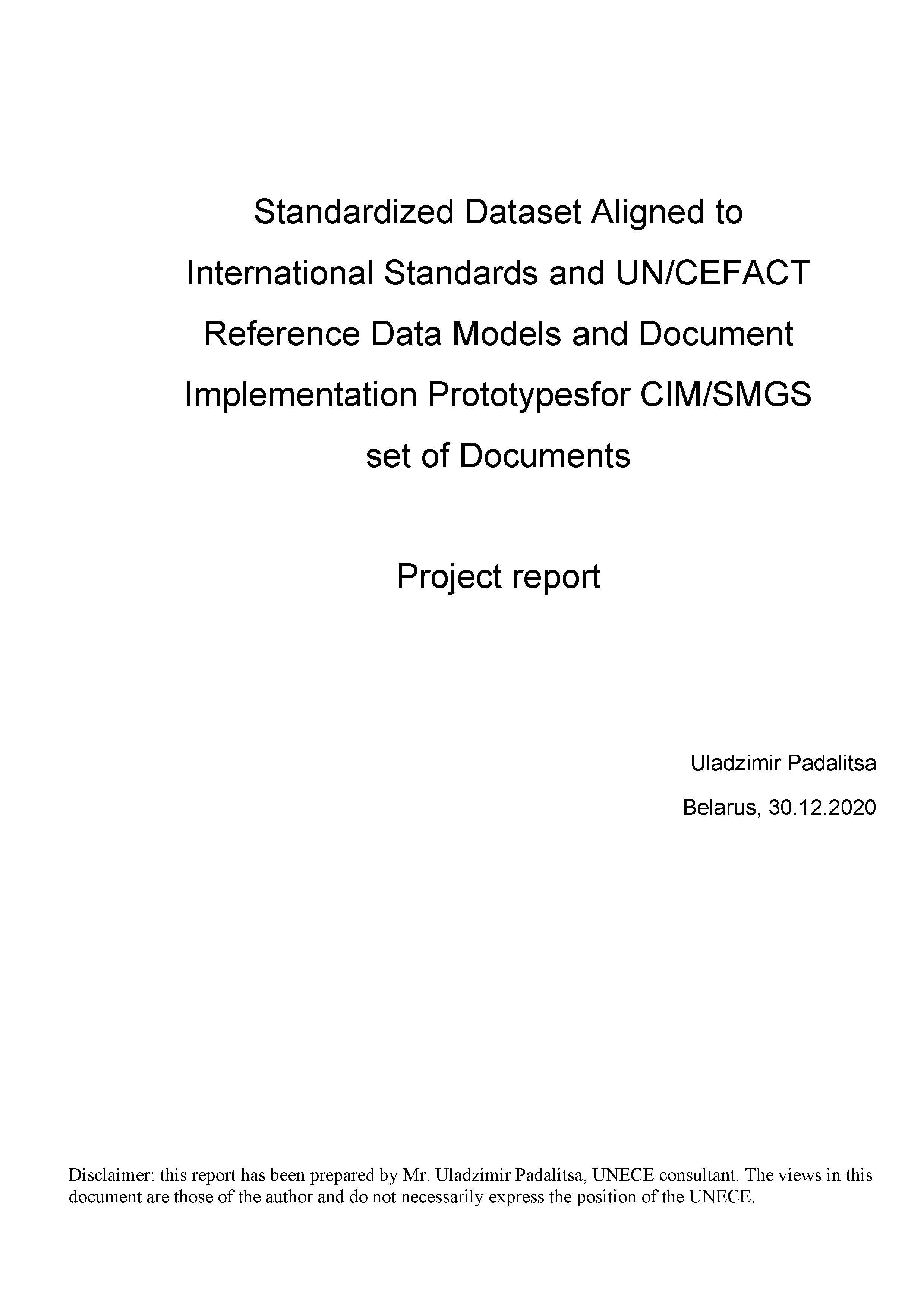
This pilot project was initiated in the context of implementing the recommendations of the 2019 and 2020 UNECE “Odessa seminars” to support the development of digital multimodal transport corridors, to increase the harmonization and standardization of data exchange in international transport, trade and logistics, to encourage electronic data exchange and thereby to reduce person-to-person contacts during the COVID-19 crisis and in the post-pandemic recovery, using relevant UN/CEFACT standards.

This included: an analysis of merchandise and information flows along the Black Sea – Baltic Sea corridor as background information for the further development of the project. A set of electronic messages (electronic document equivalents) based on the UN/CEFACT standards and Reference Data Models, using XML and JSON formats, has been developed in collaboration with relevant UN/CEFACT experts and using their guidance on how the UN/CEFACT standards should be applied to develop electronic document-equivalents for CIM/SMGS documents, in particular:

  • Packing List;
  • SMGS Consignment Note;
  • CIM/SMGS Consignment Note (BY);
  • CIM/SMGS Wagon List;
  • Invoice for Customs (in cooperation with the Ukrainian consultant in the project).

A survey and analysis took place on what was necessary to accomplish for a complete conversion of data between maritime, road and railway transport. The focus was on new standards for generic document equivalents, in order to look into possibilities for their pilot implementation under the United Nations Development Account (UNDA) coronavirus (COVID-19) response project “Transport and Trade Connectivity in the  Age of Pandemics”. The consultant worked in the areas of:

  • practical aspects of preparing electronic standards for data exchange and new message structure subsets contextualized to the specific transport modes, using UN/CEFACT standards that would best service digital multimodal corridors and support modern technologies, including XML and JSON;
  • development and implementation of a data model for the Black Sea – Baltic Sea digital corridor, combining the data for key documents accompanying goods, as described above, as identified in the project, and based on the UN/CEFACT Multimodal Transport Reference Data Model.

The main objective was to foster the harmonization of electronic data sharing, using global (UN/CEFACT) standards for transport, trade, and logistics, and to prepare templates for electronic document equivalents based on the UN/CEFACT semantic standards and reference data models.

List of Annexes

Annex I. Original documents, used for mappings and conversions

Attachment

Use of digital UN/CEFACT standards in air cargo boosts efficiency and resilience of multimodal transport and supply chains

Public health concerns over COVID-19 are a new driving force behind digitalization of air cargo and the broader supply chain, and this will be enduring. Meanwhile, e-commerce and other trends are transferring control of cargo flows to the consumer and away from manufacturers, which reflects significant evolution in the marketplace.